
Booster Pump Installation in Bird Rock
Southern California Well Service provides professional booster pump installation to Bird Rock and throughout San Diego County. Founded in 2020, with 60+ years of family heritage, we're the trusted choice for well owners.
📋 In This Guide
Need Booster Pump Installation in Bird Rock?
We serve Bird Rock and all of San Diego County. Licensed C-57 contractor with 24/7 emergency service.
Call: (760) 440-8520Our Booster Pump Installation Services
- Fast response times to Bird Rock
- Licensed, bonded, and insured (C-57 #1086994)
- Upfront pricing with no hidden fees
- Quality parts and professional workmanship
- 24/7 emergency service available
- Residential and agricultural wells
Why Bird Rock Chooses SCWS
✓ Local Expertise
We know San Diego County geology and wells
✓ Fast Response
Same-day service for Bird Rock
✓ Fair Pricing
Honest quotes, no surprises
✓ Quality Work
CSLB #1086994 · founded 2020
Our Locations
Related Articles
Continue learning about well maintenance and troubleshooting
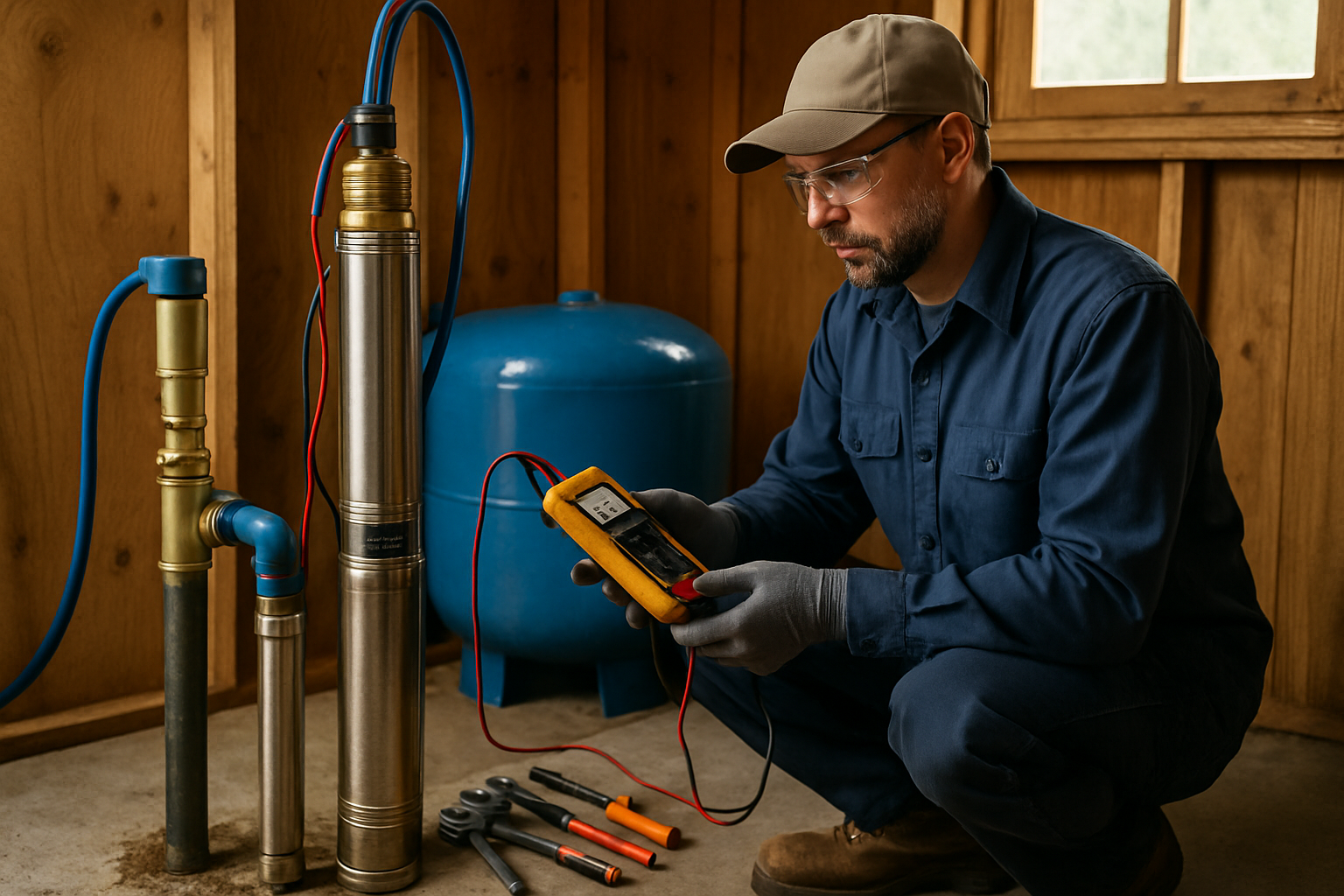
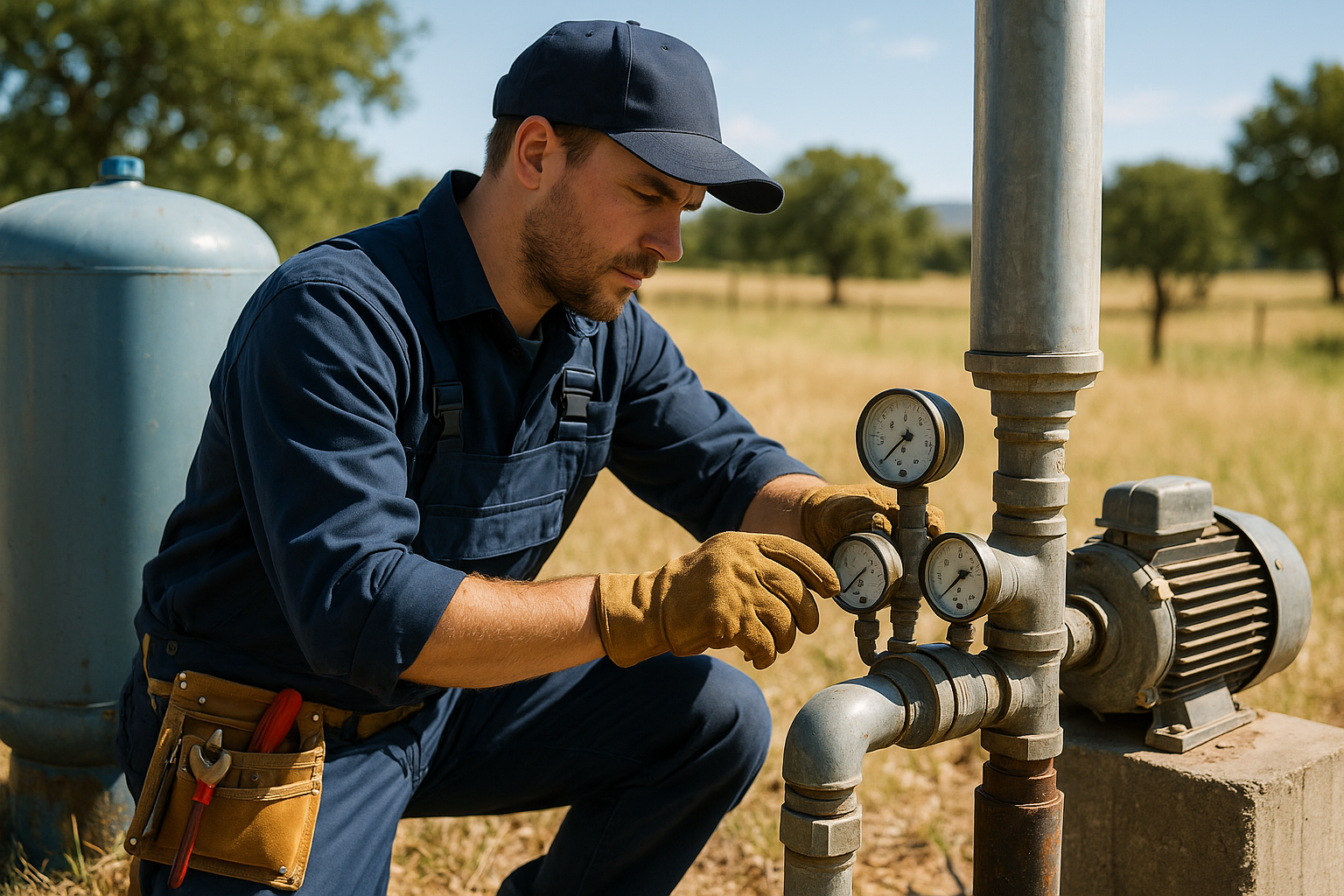

Booster Pump Solutions for Bird Rock Properties
As a Bird Rock property owner with a private well, you rely on your water system every day. The local geology in San Diego County — decomposed granite and fractured crystalline rock — creates unique conditions that require experienced, local well technicians who understand the area.
Bird Rock Geology and Well Characteristics
Bird Rock sits in coastal San Diego County where geology transitions from marine sedimentary layers near the coast to the deeper Peninsular Ranges batholith inland. Most wells in this area tap:
- San Diego Formation — coastal sedimentary layers (200-400 feet deep)
- Santiago Peak Volcanics — fractured bedrock aquifers (300-600 feet deep)
- Coastal groundwater basins — influenced by Pacific Ocean proximity
These geological conditions create moderate to high TDS (total dissolved solids) levels, seasonal water table fluctuations tied to rainfall patterns, and occasional saltwater intrusion concerns near the coast. Wells drilled 300-500 feet deep are common in Bird Rock and surrounding La Jolla neighborhoods.
When You Need a Booster Pump in Bird Rock
Not every well needs a booster pump. Here's how to diagnose if you need one:
Signs You Need a Booster Pump
- Low water pressure at fixtures (below 40 PSI) even when your pressure tank is working correctly
- Weak flow on upper floors — gravity and friction losses reduce pressure as water climbs
- Pressure drops during simultaneous use — shower weakens when someone flushes a toilet or starts the dishwasher
- Sprinkler zones won't reach full coverage — irrigation systems need 50-60 PSI minimum for proper operation
- Low-yielding well — your well can't keep up with household demand, and a storage tank + booster system can bridge the gap
- Elevation challenges — if your home sits 100+ feet above your well, every 2.31 feet of elevation costs you 1 PSI
Diagnosis Process
Before installing a booster pump, we verify the actual problem:
- Measure static pressure at the pressure tank — is your well pump delivering adequate pressure to the tank?
- Check pressure tank condition — a waterlogged bladder tank will cause pressure problems that a booster won't fix
- Test flow rate and recovery — measure GPM output and verify your well can support added demand
- Evaluate the distribution system — old galvanized pipes, undersized lines, or clogged filters cause pressure loss
- Calculate head and friction losses — determine how much boost you actually need based on elevation, distance, and pipe diameter
A proper diagnosis saves money. If your well pump is undersized or your pressure tank bladder is shot, a booster pump will mask the real problem temporarily while creating new issues downstream.
Types of Booster Pumps for Bird Rock Wells
Choosing the right booster pump depends on your water demand, pressure requirements, and system design. Here are the three main types we install:
1. Variable-Speed Booster Pumps (Constant Pressure Systems)
Best for: Homes with fluctuating demand, modern appliances, consistent pressure requirements
Variable-speed boosters (also called constant-pressure systems or CSV systems) adjust motor speed in real time to match water demand. When you turn on one faucet, the pump runs slower. Open three fixtures, and it speeds up. The result is rock-solid pressure at every fixture, reduced cycling, and longer equipment life.
Advantages:
- Constant pressure regardless of demand (typically 50-60 PSI)
- Eliminates pressure swings and water hammer
- Reduces stress on plumbing and appliances
- Lower energy consumption compared to traditional on/off cycling
- Quieter operation with soft-start motors
Disadvantages:
- Higher upfront cost ($1,200-$2,500 installed)
- Requires professional calibration
- More complex electronics (VFD or pressure transducer)
Top brands: Grundfos Scala2, Franklin SubDrive, Goulds AquaBoost II
2. Inline Booster Pumps (On-Demand)
Best for: Smaller homes, irrigation boost, targeted pressure fixes
Inline boosters are compact units installed directly in the water line. They turn on when flow is detected and shut off when demand stops. These work well for boosting pressure to a specific zone — an upstairs bathroom, a detached ADU, or an irrigation system.
Advantages:
- Lower cost ($400-$900 installed)
- Compact footprint (fits in tight spaces)
- Simple installation — no large tank required
- Automatic operation with flow switch
Disadvantages:
- Limited pressure boost (typically 15-30 PSI)
- Not suitable for whole-house applications in larger homes
- Can't handle simultaneous high-demand fixtures well
- Shorter lifespan if cycled heavily (3-7 years typical)
Top brands: Grundfos CMB, Zoeller Home Pressure Booster, Burcam
3. Tank-Based Booster Pump Systems
Best for: Low-yielding wells, rural properties, homes with storage tanks
When your well can't keep up with peak demand (common in Bird Rock during dry months), a booster pump paired with a storage tank creates a buffer. The well pump fills a 250-500 gallon atmospheric storage tank slowly throughout the day. The booster pump pulls from this tank on demand, delivering consistent pressure even when the well is recovering.
Advantages:
- Solves low-yield well problems without re-drilling
- Provides emergency water reserve during power outages (if tank is elevated)
- Reduces main pump cycling (extends well pump life)
- Can integrate with rainwater harvesting or backup water sources
Disadvantages:
- Higher cost ($2,000-$4,500 for tank + booster system)
- Requires significant space (500-gallon tank is 5 feet tall × 4 feet diameter)
- Needs periodic tank cleaning to prevent biofilm and sediment buildup
- More complex plumbing with float switches and controls
Recommended systems: Grundfos MQ series + poly cistern, Pentair/Sta-Rite booster + fiberglass tank
Booster Pump Installation Process
Professional installation ensures the system works correctly and doesn't damage your well or plumbing. Here's our step-by-step process:
Step 1: System Assessment and Design
- Measure existing pressure at multiple points (wellhead, tank, fixtures)
- Test flow rate and well recovery
- Calculate total dynamic head (TDH) requirements based on elevation, distance, and friction loss
- Size the booster pump to match your actual needs (not oversized, which wastes energy and causes cycling)
- Design the installation layout (pump location, electrical requirements, plumbing tie-in points)
Step 2: Electrical and Plumbing Prep
- Install dedicated electrical circuit (most boosters need 120V or 240V with proper grounding)
- Run conduit and wiring per NEC code
- Prepare plumbing tie-in points with shut-off valves and unions for easy future service
- Install pressure relief valve and check valve to protect the system
Step 3: Pump Installation
- Mount the booster pump on a solid, vibration-dampening surface (concrete pad or reinforced platform)
- Connect inlet and outlet plumbing with flexible connectors to reduce vibration transfer
- Install pressure gauge, pressure switch (or transducer for constant-pressure systems), and expansion tank if needed
- Wire the system with proper overcurrent protection and disconnect switch
Step 4: Calibration and Testing
- Prime the pump (remove air from the system)
- Set cut-in and cut-out pressures (or calibrate constant-pressure setpoint)
- Test operation under various demand conditions (single fixture, multiple fixtures, peak demand)
- Verify there's no backflow or cross-connection issues
- Check for leaks, vibration, and unusual noise
- Train the homeowner on system operation, maintenance, and troubleshooting
Cost Breakdown for Bird Rock Booster Pump Installation
Installation costs vary based on system type, site conditions, and electrical/plumbing work required. Here's a realistic price range for 2026:
| System Type | Equipment Cost | Labor + Materials | Total Installed |
|---|---|---|---|
| Inline Booster (Grundfos CMB, Zoeller) | $350-$650 | $300-$500 | $650-$1,150 |
| Constant-Pressure System (Grundfos Scala2, Franklin SubDrive) | $900-$1,600 | $500-$900 | $1,400-$2,500 |
| Tank + Booster System (500-gal storage) | $1,200-$2,200 | $800-$1,500 | $2,000-$3,700 |
Additional costs to consider:
- Electrical upgrades: If your panel is full or lacks capacity, adding a circuit costs $200-$600
- Plumbing modifications: Replacing old galvanized pipes or upsizing distribution lines adds $300-$1,200
- Permits: San Diego County typically requires permits for new electrical and plumbing work ($150-$400)
- Pressure tank replacement: If your existing tank is shot, budget $400-$800 for a new one
Maintenance and Troubleshooting
Booster pumps are reliable when maintained properly. Here's what Bird Rock homeowners should know:
Annual Maintenance Checklist
- Check pressure settings: Verify the system maintains target pressure (50-60 PSI typical)
- Inspect for leaks: Look at inlet/outlet connections, pressure relief valve, and pump seals
- Test check valve: Ensure backflow isn't occurring when the pump is off
- Clean inlet screen: Remove debris and sediment from the pump intake filter
- Listen for unusual noise: Grinding, squealing, or cavitation sounds indicate a problem
- Verify electrical connections: Tighten terminals and check for corrosion
Common Problems and Fixes
Pump runs but no pressure increase:
- Check for air lock — bleed air from the system at the highest fixture
- Verify check valve isn't stuck open (allowing backflow)
- Inspect impeller for damage or debris
Pump cycles on and off rapidly:
- Check for small leak in the system (even a dripping faucet can cause cycling)
- Verify pressure tank pre-charge is correct (2 PSI below cut-in pressure)
- Inspect expansion tank if installed with constant-pressure system
Low pressure despite pump running:
- Measure voltage at the pump — low voltage reduces motor speed and output
- Check for clogged inlet filter or crimped supply line
- Verify pump is sized correctly for your head and flow requirements (undersized pump can't deliver rated pressure at high flow)
Pump won't start:
- Check circuit breaker and reset if tripped
- Test pressure switch or transducer for proper operation
- Inspect for seized impeller (disconnect power, try rotating shaft manually)
- Verify capacitor on single-phase motors (motor hums but won't spin = bad capacitor)
Alternatives to Booster Pumps
Sometimes a booster pump isn't the best solution. Consider these alternatives:
1. Replace Undersized Well Pump
If your well pump is delivering less than 40 PSI to the pressure tank, upgrading to a higher-horsepower or higher-stage pump may solve the problem without adding a booster. A new 1.5 HP submersible pump with a higher head rating costs $1,200-$2,200 installed — comparable to a booster system but with one less component to maintain.
2. Install a Larger Pressure Tank
Upgrading from a 20-gallon to an 80-gallon pressure tank won't increase pressure, but it will reduce pump cycling and provide more reserve capacity during peak demand. This works well if your pressure is adequate most of the time but drops during simultaneous use. Cost: $400-$900 installed.
3. Replace Galvanized Pipes
Old galvanized steel pipes corrode internally, reducing effective diameter and causing massive pressure loss. Replacing galvanized with PEX or copper often restores pressure without any pump upgrades. If your home was built before 1980 and still has galvanized plumbing, this is worth investigating. Whole-house repipe costs $3,000-$8,000 but solves pressure and water quality issues permanently.
4. Cycle Stop Valve (CSV) System
A Cycle Stop Valve controls your existing well pump to deliver constant pressure without a separate booster pump. The CSV throttles flow to maintain steady pressure as demand changes. This works if your well pump has adequate capacity but pressure swings are the problem. Cost: $400-$800 installed (valve + small pressure tank).
Why Local Expertise Matters in Bird Rock
Well systems in San Diego County face challenges specific to the region. Well depths, water tables, and rock formations vary significantly even between neighboring properties. A technician familiar with Bird Rock's specific conditions can diagnose problems faster and recommend solutions that actually work — not generic fixes from a textbook.
What Sets SCWS Apart for Bird Rock Customers
- Two local offices — Ramona and Anza mean faster response times to Bird Rock
- Full-service well company — drilling, pump repair, water treatment, and everything in between
- Licensed C-57 contractor — properly licensed well drilling contractor (CSLB #1086994)
- Transparent pricing — honest assessments and upfront quotes, no surprise charges
- Same-day emergency service — when you have no water, we respond fast
- Licensed C-57 (CSLB #1086994) — founded 2020, with 60+ years of family heritage
Frequently Asked Questions
How much does a booster pump cost to run?
A typical ½ HP booster pump running 2-3 hours per day costs $5-$12 per month in electricity at San Diego's average rate of $0.35/kWh. Variable-speed systems are more efficient and typically cost 20-30% less to operate than traditional on/off systems.
Can I install a booster pump myself?
Technically possible if you have plumbing and electrical skills, but we don't recommend it. Improper installation can damage your well pump, void equipment warranties, create backflow hazards, or violate local code. Professional installation ensures the system is sized correctly, wired safely, and calibrated for optimal performance.
Will a booster pump increase my well's flow rate?
No. A booster pump increases pressure, not flow. If your well produces 5 GPM, a booster pump can push that water at higher pressure but can't make the well yield more. For low-yield wells, a storage tank + booster system is the correct solution.
How long do booster pumps last?
Quality booster pumps last 10-15 years with proper maintenance. Inline boosters handling heavy cycling may last 5-8 years. Constant-pressure systems with VFDs tend to last longer because they cycle less and run at lower speeds most of the time.
Do I need a permit to install a booster pump in San Diego County?
Electrical work typically requires a permit. Plumbing modifications may require a permit depending on scope. We handle permits as part of our installation service to ensure everything is code-compliant.
Can a booster pump fix low water pressure from a municipal supply?
Yes, but verify your water district allows booster pumps. Some require backflow prevention devices or restrict booster use to prevent affecting neighboring properties. In Bird Rock (served by San Diego city water in most areas), boosters are allowed but must meet cross-connection control requirements.
What size booster pump do I need?
Sizing depends on your peak flow demand (GPM), required pressure increase, and total dynamic head. A typical 3-bedroom home needs 8-12 GPM at 50-60 PSI. We calculate this during our site assessment — oversized pumps waste energy and cycle excessively; undersized pumps can't maintain pressure during peak demand.
Can I use a booster pump with a low-yielding well?
Only if paired with a storage tank. The well fills the tank slowly; the booster pulls from the tank on demand. Without a tank, the booster will run the well dry during heavy use and damage the well pump through dry running.
Will a booster pump make my water heater work better?
Yes. Tankless water heaters are especially sensitive to low pressure — most require 40+ PSI to activate. Traditional tank heaters benefit from better pressure too, with faster recovery and more consistent hot water delivery to fixtures.
What maintenance does a booster pump need?
Annual inspection, inlet filter cleaning, pressure calibration check, and leak inspection. Every 3-5 years, inspect the check valve and pressure switch. Most failures we see result from lack of maintenance — sediment clogs the inlet, corroded connections cause leaks, or pressure drift goes uncorrected until the pump burns out.
Service Area
We serve Bird Rock and all surrounding communities in San Diego County, including La Jolla, Pacific Beach, Mission Beach, Ocean Beach, Point Loma, and coastal areas. With offices in Ramona (San Diego County) and Anza (Riverside County), we're positioned to reach Bird Rock quickly for both scheduled and emergency service calls.