Earthquake Damaged Well: Post-Quake Inspection and Safety Guide
What to do after an earthquake damages your well system. Safety inspection steps, common earthquake damage, and when professional assessment is critical.
📋 In This Guide
See our emergency well inspection.
(760) 440-8520Immediate Post-Earthquake Well Safety
Before approaching your wellhead after an earthquake, take a moment to assess hazards in the area. Check for gas leaks (smell or hissing sounds), downed power lines, cracked foundations near the well, and any structural damage to buildings or retaining walls that could collapse. If you smell natural gas or propane, or see electrical arcing near the well equipment, stay away and call 911 immediately.
Once you've confirmed the area is safe to approach, follow these steps in order:
- Turn off the well pump at the breaker. Even if everything appears normal, run the pump only after inspection. A damaged pump running dry or with a cracked casing can cause additional damage and contamination.
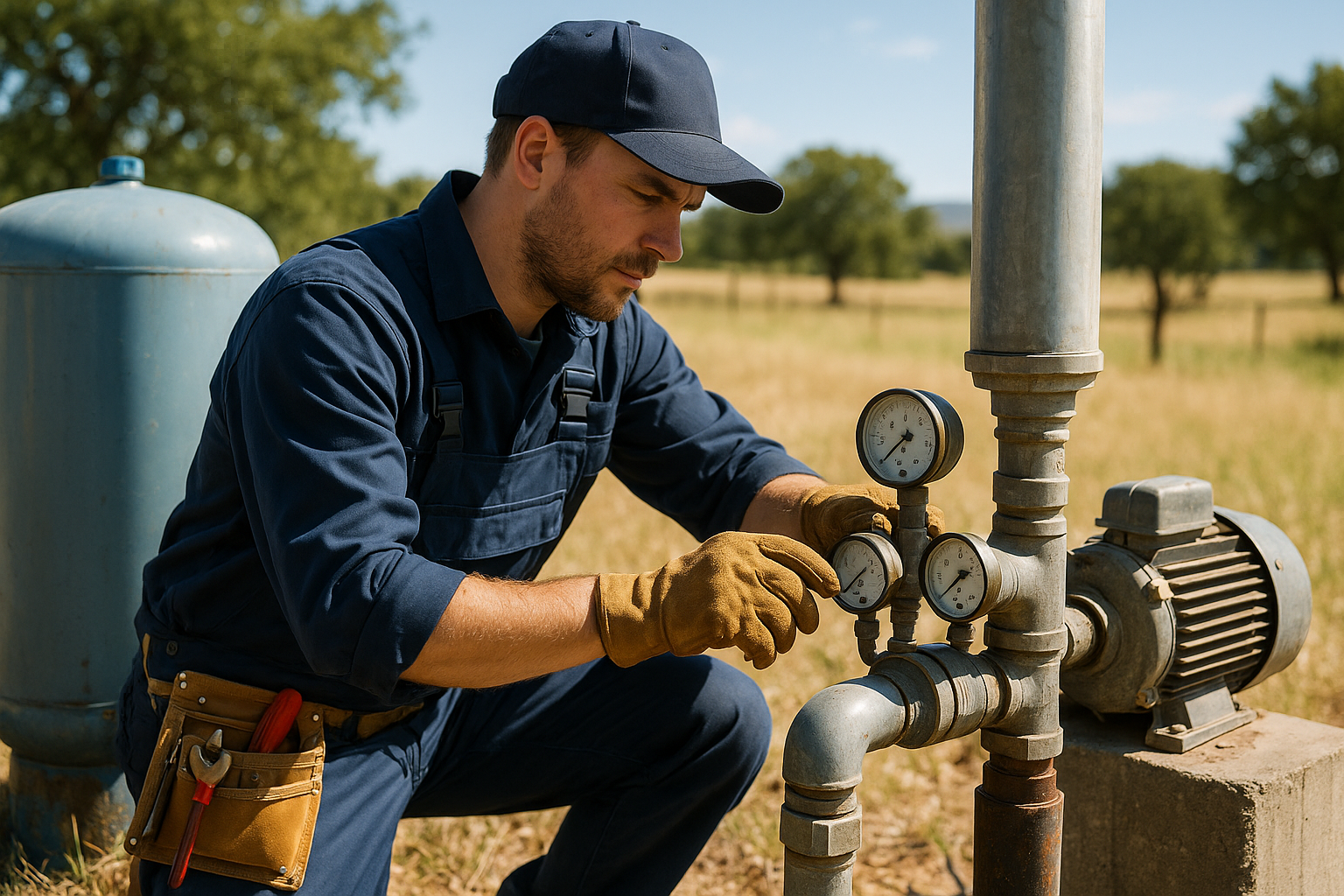
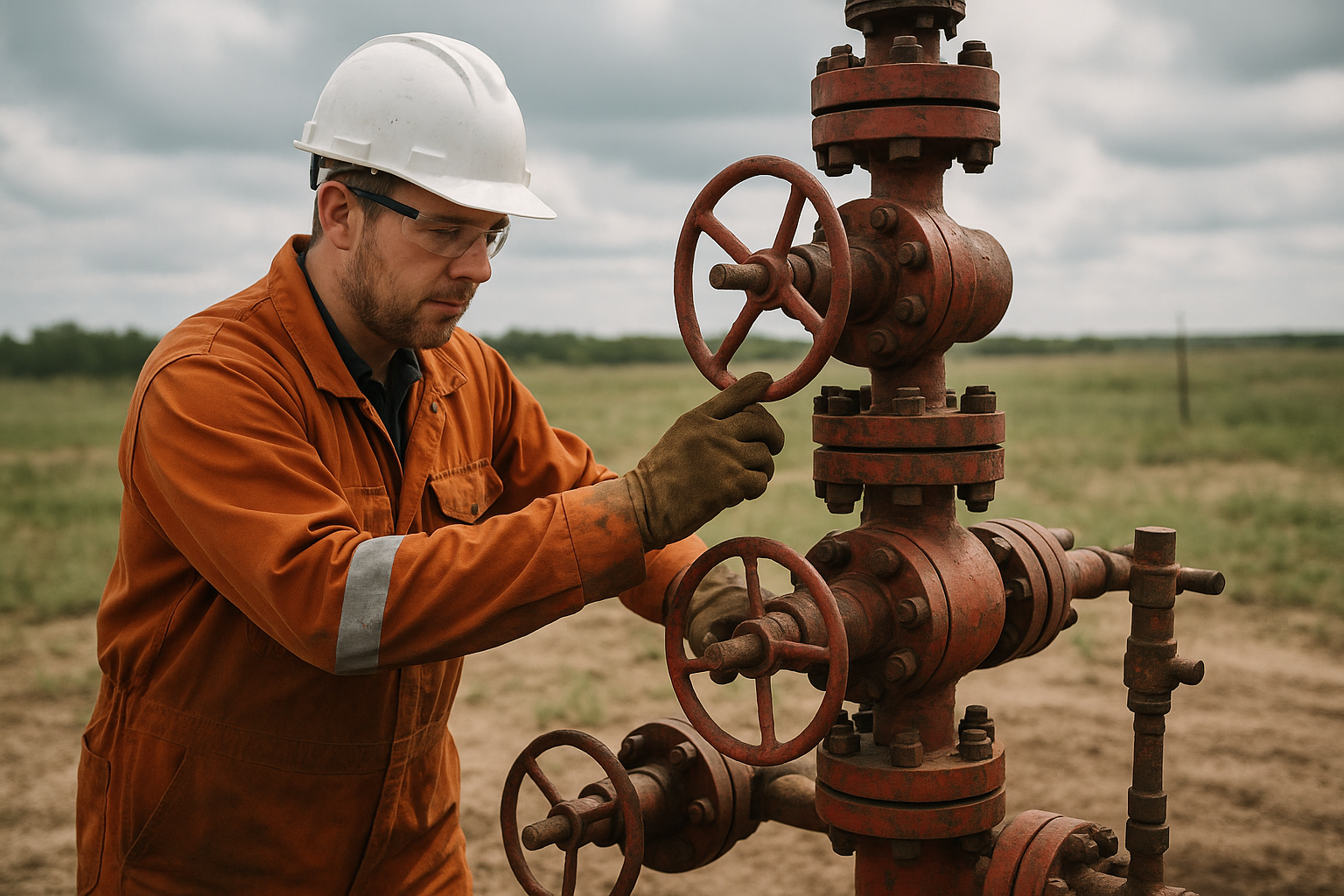
- Visually inspect the wellhead. Look for visible cracks in the casing, any shifting or tilting of the well cap, gaps opening between the casing and the concrete pad, and damage to the electrical conduit running to the well.
- Check the pressure tank area. Look for leaks at fittings, shifted or tilted tanks, cracked pressure gauges, and any water pooling that wasn't there before.
- Do NOT drink the water until you've at minimum run the system for 15–20 minutes (to flush) and checked for obvious contamination signs (color, odor, sediment). Ideally, get a bacterial test before resuming normal use.
Southern California sits on dozens of fault lines, and most well owners have never thought about earthquake damage to their well. The reality is that even a moderate earthquake (magnitude 4.5–5.5) can cause significant underground damage that isn't visible at the surface. The San Jacinto Fault runs directly through our primary service area in Riverside and San Bernardino counties, making post-earthquake well inspection a regular need for our customers.
Signs of Earthquake Well Damage
Some earthquake damage is immediately obvious; other damage takes hours or days to manifest. Watch for these indicators in the hours and days following a quake:
Immediate Signs (within hours)
- No water at all: The pump may have shifted, the drop pipe disconnected, or the electrical supply was severed underground
- Dramatically reduced flow: Casing collapse or aquifer compaction restricting water entry into the well
- Muddy or brown water: Sediment disturbance from ground shaking—common and often temporary, but can indicate casing damage
- Air spurting from faucets: The drop pipe may have cracked, or the water level may have shifted below the pump intake
- Visible damage at wellhead: Cracks in the casing, tilted well cap, broken seal, or shifted concrete pad
- Pump won't start: Electrical damage to the control box, wiring, or motor
Delayed Signs (days to weeks)
- Gradual water quality changes: Increasing sediment, new taste or odor, sulfur smell that wasn't there before—indicates new contamination pathways opened by ground shifting
- Slowly declining water level: The aquifer zone may have shifted or fractured, altering groundwater flow to your well
- New sand production: Sand in toilet tanks, faucet aerators clogging frequently—suggests the well screen or gravel pack was damaged
- Pump short-cycling: A crack in the drop pipe or casing now allows air into the system, causing the pressure tank to behave erratically
- Unexplained increase in water volume: This sounds good but can actually indicate new surface water pathways connecting to your well—a contamination risk
If you notice any of these signs after an earthquake—even a small one—document them with photos and timestamps. This information is invaluable for a professional assessment and for any insurance claims.
Common Types of Earthquake Damage
Casing Damage
Your well casing is the steel or PVC pipe that lines the borehole and keeps contaminants out of your water supply. Earthquakes can crack, crush, or shear casings—especially at joints where sections connect. Older wells with corroded steel casings are most vulnerable. A cracked casing allows surface water, soil bacteria, agricultural chemicals, and septic contamination to enter your water supply. This is the most dangerous type of earthquake damage because it's invisible from the surface and directly threatens water safety.
Diagnosis requires a downhole camera inspection. We lower a high-resolution camera down the well to visually inspect every foot of casing. Cracks, offsets, and collapses are clearly visible on camera. Cost for a camera inspection typically runs $300–$600 depending on well depth.
Drop Pipe Damage
The drop pipe connects your submersible pump (which sits deep in the well) to the surface piping. In a typical residential well, this is 100–500+ feet of PVC or galvanized steel pipe suspended inside the casing. Earthquake forces can crack PVC joints, loosen threaded connections, or in severe cases, cause the pipe to separate entirely—dropping the pump to the bottom of the well.
Signs: sudden loss of water, air in the lines, reduced flow, or hearing the pump run but no water reaching the surface. Repair requires pulling the pump and entire drop pipe assembly, which typically costs $800–$2,500 depending on well depth and pipe material. If the pump dropped to the bottom, retrieval (called "fishing") can add $500–$1,500.
Pump Displacement and Damage
Submersible pumps weigh 30–100+ pounds and hang suspended in the well on the drop pipe and safety rope. Severe shaking can cause the pump to swing and bang against the casing walls, damaging both the pump and the casing. In extreme cases, the pump can shift off-center and wedge against the casing, or the motor can be damaged by impact.
More commonly, the earthquake vibration itself can loosen electrical connections at the pump motor, cause sand to pack around the pump (especially in sandy wells), or shift the pump position so it sits closer to the bottom—where it can draw sand and sediment.
Aquifer and Groundwater Changes
This is the type of damage most people don't expect: the earthquake doesn't damage your well equipment at all, but it changes the aquifer itself. Ground shifting can:
- Close fractures that were supplying water, reducing or eliminating your well's yield
- Open new fractures that connect different aquifer zones—potentially introducing lower-quality water or contaminants from shallow zones
- Compact the aquifer material, reducing porosity and well yield permanently (called "aquifer compaction")
- Shift the water table up or down, changing your static water level and potentially leaving your pump above or too close to the water surface
- Liquefaction in sandy soils can fill the well screen with sand, blocking water entry
These changes can be temporary (water clears in days, flow returns to normal) or permanent (well never recovers to pre-earthquake production). The only way to know is to measure your post-earthquake static water level and well yield, and compare to historical data.
Electrical and Surface Equipment Damage
The pump control box, pressure switch, wiring conduit, and electrical connections are all vulnerable to earthquake damage. Conduit can crack at bends, wires can be severed inside conduit, control boxes can fall off walls, and the pressure switch can be damaged or knocked out of calibration. Check all electrical components carefully—a pump running on a damaged motor or with compromised wiring is a fire and electrocution hazard.
Professional Post-Earthquake Well Inspection
A thorough post-earthquake well inspection includes multiple steps. Here's what we do when called out after a seismic event:
- Surface inspection: Wellhead integrity, concrete pad, sanitary seal, electrical conduit, control box, pressure tank, and all visible plumbing
- Electrical testing: Amp draw on the pump motor (tells us if there's mechanical resistance), wire insulation resistance (megger test), control box components
- Pressure test: System pressure check for leaks, pressure tank pre-charge verification, pressure switch calibration
- Flow and drawdown test: Measure current well yield and compare to historical production. A significant decrease suggests aquifer or casing damage
- Water quality sampling: At minimum, total coliform and E. coli. Full panel recommended if any contamination pathway is suspected
- Downhole camera inspection: For magnitude 5.0+ quakes, or if any damage indicators are present, we run a camera to inspect the full casing length
A standard post-earthquake inspection (steps 1–5) typically costs $250–$500. Adding camera inspection brings the total to $500–$900. This is far cheaper than discovering casing damage months later after drinking contaminated water or suffering a catastrophic pump failure.
Repair Options and Costs
What happens after the inspection depends on what we find. Here are the most common earthquake damage repairs and their typical costs in San Diego, Riverside, and San Bernardino counties:
| Damage Type | Repair | Cost Range |
|---|---|---|
| Sanitary seal cracked/shifted | Replace well seal | $150–$350 |
| Surface plumbing damage | Repair/replace fittings, pipes | $200–$800 |
| Electrical damage (surface) | Rewire, replace control box | $300–$1,200 |
| Pressure tank failure | Replace tank | $350–$800 |
| Drop pipe crack/disconnect | Pull pump, repair/replace pipe | $1,000–$3,000 |
| Pump dropped to bottom | Fishing + pump pull + reset | $1,500–$4,000 |
| Pump motor damaged | Replace pump and motor | $1,800–$4,500 |
| Casing crack (minor) | Casing patch or liner | $2,000–$5,000 |
| Casing collapse/shear | Well rehabilitation or new well | $5,000–$50,000+ |
| Sand infiltration (screen damage) | Re-screen or deepen well | $3,000–$15,000 |
| Aquifer yield decrease | Hydrofracture or new well | $3,000–$50,000+ |
Many homeowner insurance policies do NOT cover earthquake damage to wells—even if you have earthquake insurance on your home. Check your policy carefully. Some policies cover "land movement" or "subsidence" which may apply. We can provide detailed inspection reports and repair estimates for insurance claims.
Southern California Seismic Risk for Well Owners
Our primary service area covers three counties with significant seismic activity:
- San Diego County: Rose Canyon Fault, Elsinore Fault Zone, and dozens of smaller faults. Julian, Ramona, and the backcountry communities sit near active fault traces.
- Riverside County: San Jacinto Fault Zone (one of the most active in California), Elsinore Fault, and the San Andreas Fault along the Coachella Valley. Hemet, San Jacinto, Anza, and Idyllwild are highest risk.
- San Bernardino County: San Andreas Fault, San Jacinto Fault, and numerous smaller faults. Big Bear, Lake Arrowhead, Running Springs, and the high desert communities all have significant seismic exposure.
The USGS estimates a 75% probability of a magnitude 7.0+ earthquake in Southern California within the next 30 years. For well owners, this means post-earthquake inspection isn't a matter of "if" but "when." Having a relationship with a well service company before an earthquake hits means you'll be at the front of the line when everyone in the region needs help simultaneously.
When to Call a Professional
Call a well service professional immediately after any earthquake if:
- Water flow stopped or significantly decreased — don't wait to see if it comes back. Running a damaged pump can cause additional damage.
- Water is persistently muddy, sandy, or discolored — temporary turbidity (clearing within a few hours) may be normal, but persistent sediment indicates structural damage.
- Visible damage to the wellhead or equipment — cracks, shifting, broken seals, or damaged electrical components all need professional assessment.
- Electrical problems with the pump — tripping breakers, pump not starting, unusual sounds, or burning smell. Do NOT attempt electrical repairs yourself on well equipment.
- The earthquake was magnitude 5.0+ within 20 miles of your well — even if everything appears normal, underground damage may not be immediately visible. Get an inspection within 48 hours.
- Your well is near a known fault line — wells within 1 mile of an active fault trace should be inspected after any felt earthquake, regardless of magnitude.
- You notice new springs, wet spots, or sinkholes near the well — ground movement may have created new water pathways that could contaminate your well or undermine the casing.
At Southern California Well Service, we respond to post-earthquake calls as priority emergencies. Our 6-ton pump rigs carry downhole cameras, pump-pulling equipment, and common repair parts. In most cases, we can complete inspection and basic repairs in a single visit. For larger earthquakes affecting multiple customers, we add crew capacity to minimize wait times.
We service all major pump brands including Franklin Electric, Grundfos, Goulds (Xylem), and Sta-Rite (Pentair). Our trucks carry common parts and components for same-day repairs.
Frequently Asked Questions
Can an earthquake damage my well even if my house is fine?
Yes. Wells extend deep underground where seismic forces are different than at the surface. Earthquakes can crack well casings, shift aquifers, cause sand infiltration, damage drop pipes, and dislodge pumps—all while your home shows no damage.
Should I test my well water after an earthquake?
Yes, always test after any significant earthquake. Ground shifting can introduce surface contaminants, disturb sediment, or crack casings that allow contamination. Get a basic bacteria test at minimum, or a full panel if you notice any changes in water quality.
My well water turned muddy after the earthquake—is it ruined?
Not necessarily. Earthquakes often disturb sediment in aquifers, causing temporary turbidity. Run the well for several hours (water plants, not drain) and see if it clears. If turbidity persists beyond 24-48 hours, or if sand appears, you need professional evaluation for casing damage.
Get Expert Help
Contact Southern California Well Service for professional assistance.
Call (760) 440-8520Serving San Diego, Riverside & San Bernardino Counties
Related Articles
Continue learning about well maintenance and troubleshooting