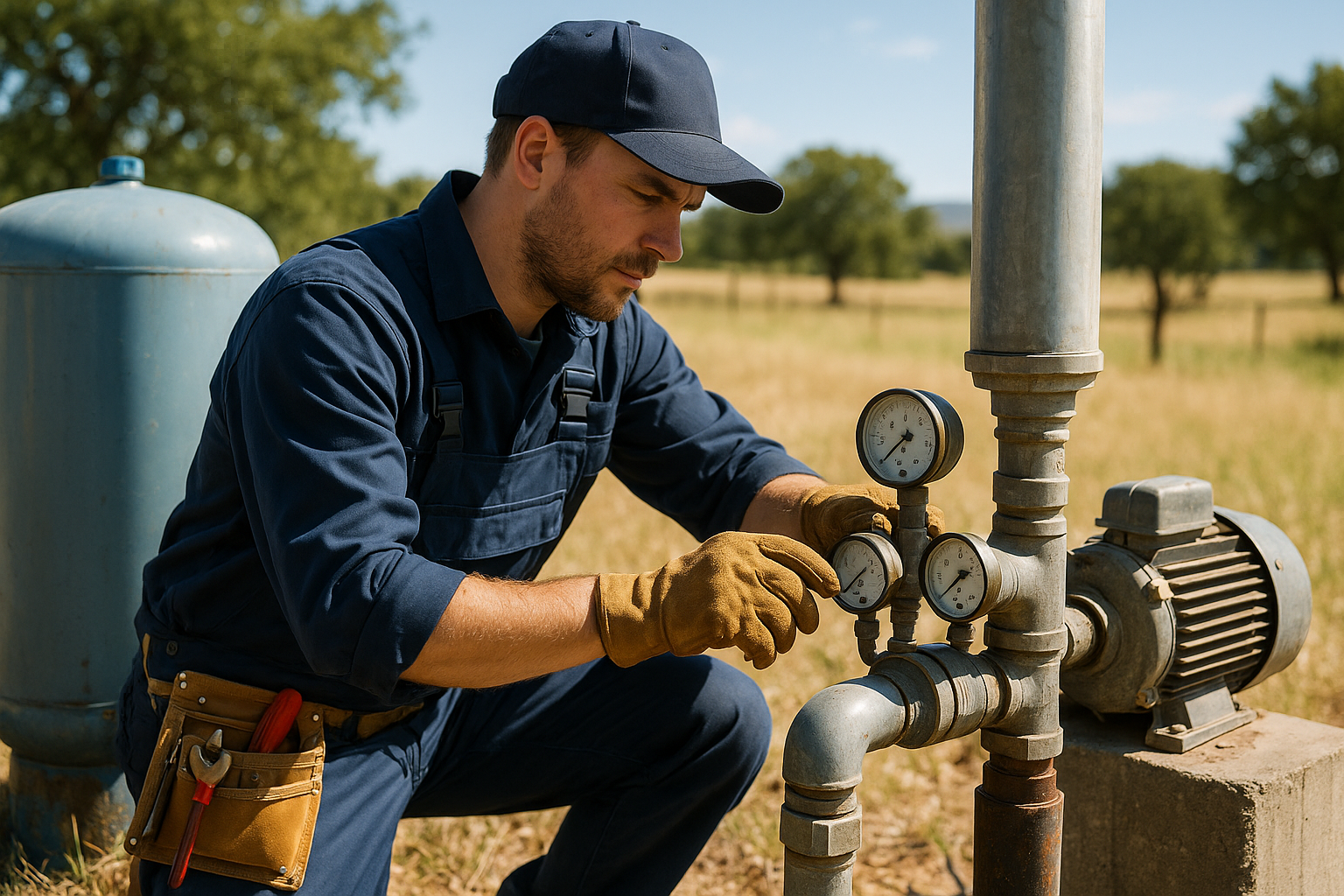
You walk into your pump house or garage and notice your pressure tank is dripping wet. Water droplets cover the surface, and there's even a puddle forming on the floor. Is your tank leaking? Is something wrong?
📋 In This Guide
- Why Pressure Tanks Sweat
- When Sweating Signals a Problem
- How to Reduce Tank Condensation
- San Diego County Considerations
- Tank Materials and Condensation
- When to Call a Professional
- Concerned About Your Pressure Tank?
- Frequently Asked Questions
- Related Articles
In most cases, a sweating pressure tank is completely normal—it's just physics at work. But sometimes that moisture signals a problem that needs attention. Here's how to tell the difference.
Why Pressure Tanks Sweat
Pressure tank condensation happens for the same reason a cold glass sweats on a summer day: when warm, humid air contacts a cold surface, moisture in the air condenses into liquid water.
Your well water is typically 55-65°F, significantly cooler than summer air temperatures. The steel tank holding this cold water becomes a condensation magnet when conditions are right:
- High humidity: More moisture in the air means more condensation potential
- Temperature differential: Bigger gap between air and water temperature = more condensation
- Poor ventilation: Stagnant air holds moisture near the tank surface
- High water usage: More cold water cycling through keeps the tank cold
When Sweating Is Normal
Condensation is expected and harmless when:
- It occurs primarily in summer or during humid weather
- The moisture is evenly distributed across the tank surface
- It dries up when humidity drops
- There's no corresponding drop in system pressure
- The water smells and looks normal (like your well water)
In San Diego County, tank sweating is most common during:
- May-June: Marine layer brings humidity inland
- Monsoon season (July-September): Tropical moisture increases humidity
- After rain: Elevated humidity lingers
When Sweating Signals a Problem
Not all moisture on your tank is innocent condensation. Here's how to identify concerning situations:
1. Localized Wetness (Possible Leak)
If moisture is concentrated in one area—especially near fittings, seams, or the bottom of the tank—you may have a leak rather than condensation.
How to test:
- Wipe the tank completely dry with towels
- Watch where moisture first appears
- Condensation appears uniformly; leaks appear at specific points
- Check all fittings, the pressure gauge connection, and drain valve
2. Year-Round Sweating
If your tank sweats constantly regardless of weather, consider:
- Waterlogged tank: A failed bladder means the tank is full of cold water, maximizing condensation. Check for rapid pump cycling as confirmation.
- Inadequate ventilation: A sealed pump house traps humid air
- Indoor installation issues: Tanks in basements or crawl spaces may sweat more
3. Rust and Corrosion
Persistent moisture leads to rust. If you see:
- Rust streaks running down the tank
- Flaking or bubbling paint
- Pitting on the steel surface
- Rust at the tank base
The condensation has been excessive long enough to cause damage. Address the moisture and consider whether the tank integrity has been compromised.
4. Floor Damage or Mold
If condensation drips onto:
- Wooden floors (rot risk)
- Concrete (mineral staining, efflorescence)
- Drywall or walls (mold growth)
The situation needs correction to prevent secondary damage.
How to Reduce Tank Condensation
1. Improve Ventilation
Moving air prevents moisture from lingering on the tank surface:
- Install vents or louvers in the pump house
- Add a small exhaust fan (can be on a humidistat)
- Keep doors/windows cracked when weather permits
- Ensure there's airflow around all sides of the tank
2. Insulate the Tank
Tank insulation blankets or jackets prevent warm, humid air from contacting the cold tank surface:
- Water heater blankets: Inexpensive option ($20-40), can be cut to fit
- Purpose-built tank jackets: Available for common tank sizes
- Foam board insulation: Can be custom-fitted around tank
- Spray foam: Professional option, very effective
Important: Leave access to the air valve (Schrader valve) and pressure gauge for maintenance. Don't insulate if you suspect the tank is waterlogged—fix that first.
3. Install a Drip Pan
If condensation can't be eliminated, manage it:
- Place a plastic or metal drip pan under the tank
- Use a pan with a drain that leads outside or to a floor drain
- Add a moisture alarm for early warning
4. Dehumidifier
For enclosed spaces like basements, a dehumidifier removes moisture from the air before it can condense:
- Size the dehumidifier for the space
- Use one with automatic drainage if possible
- Set to maintain 40-50% relative humidity
5. Address Waterlogged Tanks
A waterlogged tank (failed bladder) sweats excessively because it's completely full of cold water. Signs include:
- Pump short cycling (turning on/off rapidly)
- Tank sounds solid when tapped (no hollow area)
- Little water comes out when tank is drained with pump off
Replace the tank or bladder to fix this issue. A properly functioning tank has an air cushion that reduces the cold surface area.
San Diego County Considerations
Our region has unique factors affecting tank condensation:
Marine Layer
Coastal and near-coastal areas (including many parts of Escondido, Poway, and San Marcos) experience regular marine layer intrusion, bringing humid air inland. Tanks sweat more during May-June "June Gloom" season.
Summer Monsoons
Desert and mountain communities (Borrego Springs, Julian, Ramona) see humidity spikes during summer monsoon patterns. Brief but intense humidity can cause sudden condensation.
Cold Groundwater
San Diego County well water typically ranges from 58-68°F depending on depth and location. Deeper wells tend to have colder, more stable temperatures that increase condensation potential.
Tank Materials and Condensation
Different tank types handle condensation differently:
Steel Tanks (Most Common)
- Conduct heat well—sweat readily
- Susceptible to rust from prolonged moisture
- Can be insulated effectively
- Paint helps protect against corrosion
Fiberglass Tanks
- Don't rust, but still sweat
- Better insulating properties than steel
- More expensive but longer-lasting in humid environments
Stainless Steel Tanks
- Corrosion-resistant
- Still sweat due to conductivity
- Premium option for problem environments
When to Call a Professional
Contact a well service company if:
- You can't determine if moisture is condensation or a leak
- The tank shows signs of rust or corrosion
- Your pump is short cycling (possible waterlogged tank)
- You notice pressure drops along with moisture
- Condensation is causing structural damage
Concerned About Your Pressure Tank?
Whether it's condensation, a leak, or a failing bladder, we can diagnose and fix the problem.
Call SCWS at (760) 440-8520 for pressure tank inspection and service throughout San Diego County.
Frequently Asked Questions
- Why is my well pressure tank sweating?
- Cold well water (typically 55-65°F) cools the tank surface. When warm, humid air contacts this cold surface, moisture condenses—just like a cold glass on a summer day. This is normal in humid conditions.
- How do I know if my tank is sweating or leaking?
- Wipe the tank dry and watch where moisture appears first. Condensation forms uniformly across the surface; leaks appear at specific points like fittings, seams, or the gauge connection. Leaks also won't dry up when humidity drops.
- Will tank condensation cause damage?
- Occasional condensation is harmless. Persistent condensation can cause rust on steel tanks, mold growth in enclosed spaces, and damage to floors or nearby materials. Address excessive condensation with ventilation, insulation, or drainage.
- Should I insulate my pressure tank?
- Insulation can significantly reduce condensation by preventing humid air from contacting the cold tank surface. Use a water heater blanket or purpose-built tank jacket, leaving access to the air valve and pressure gauge.
- Why does my tank sweat more in summer?
- Summer brings higher humidity (especially during marine layer and monsoon season in San Diego) and a greater temperature difference between warm air and cold well water. Both factors increase condensation.
- Can a waterlogged tank cause excessive sweating?
- Yes. A waterlogged tank (failed bladder) is completely full of cold water, maximizing the cold surface area and condensation. Look for pump short cycling as confirmation—the tank needs replacement.
Related Articles
Continue learning about well maintenance and troubleshooting