Whole House Filtration for Wells: Complete System Guide
Unlike city water that's treated before reaching your home, private well water comes straight from the ground with whatever nature puts in it—sediment, minerals, bacteria, and more. A whole house filtration system treats water at the point of entry, so every tap, shower, and appliance gets clean water.
📋 In This Guide
This guide covers how to design a whole-house filtration system for your well water, including component selection, proper sequencing, sizing, and maintenance.
Start With Water Testing
You can't design the right system without knowing what's in your water. Test for:
Basic Test Panel (Everyone)
| Parameter | What It Tells You | Treatment If High |
|---|---|---|
| Hardness | Calcium/magnesium levels | Water softener |
| Iron | Causes staining, taste issues | Iron filter |
| Manganese | Black staining, metallic taste | Oxidation filter |
| pH | Acidity (affects corrosion) | Neutralizer |
| TDS | Total dissolved minerals | Varies by composition |
| Coliform bacteria | Biological contamination | UV sterilizer |
| Nitrates | Agricultural/septic contamination | RO or ion exchange |
Additional Testing (As Needed)
- Sulfur — If you smell rotten eggs
- Tannins — If water has yellow/brown color
- Arsenic — Recommended in certain areas
- Lead — If you have old plumbing
Components of a Whole House System
Stage 1: Sediment Filtration
Purpose: Removes particles—sand, silt, rust, scale
- Type: Cartridge filter (most common) or spin-down
- Rating: 5 microns for most wells; 1 micron before UV
- Housing: "Big Blue" 4.5" x 20" for whole-house flow
- Cost: $100-$300 installed
- Maintenance: Replace cartridge every 1-6 months
Stage 2: Iron/Manganese Removal (If Needed)
Purpose: Removes iron (red/orange staining) and manganese (black staining)
- Type: Oxidizing filter (Birm, Greensand, Katalox)
- How it works: Oxidizes dissolved iron, filter media captures it
- Backwashing: Automatic, typically every few days
- Cost: $800-$2,500 installed
- Maintenance: Media replacement every 5-8 years
Stage 3: Water Softener (If Hard Water)
Purpose: Removes calcium and magnesium that cause scale
- Type: Ion exchange (salt-based) most effective
- How it works: Exchanges hardness minerals for sodium
- Regeneration: Automatic, uses salt brine
- Cost: $600-$2,500 installed
- Maintenance: Add salt monthly; resin lasts 10-15 years
Stage 4: Carbon Filtration (For Taste/Odor)
Purpose: Improves taste, removes chemicals and odors
- Type: Granular activated carbon (GAC) or carbon block
- Removes: Chlorine, VOCs, pesticides, organic compounds
- Cost: $300-$1,500 installed
- Maintenance: Replace media annually or as needed
Stage 5: UV Sterilization (If Bacteria Concern)
Purpose: Kills bacteria, viruses, parasites
- Type: Ultraviolet light chamber
- How it works: UV light damages microorganism DNA
- Requirements: Water must be clear (pre-filtration essential)
- Cost: $400-$1,000 installed
- Maintenance: Replace bulb annually; sleeve every 2-3 years
Optional: Specialty Filters
- Acid neutralizer — Raises pH, prevents corrosion (calcite media)
- Tannin filter — Removes organic color
- Arsenic filter — Specialty media for arsenic removal
- Sulfur removal — Aeration or oxidation systems
Proper Filter Sequencing
Order matters! Each stage protects the next.
Correct Sequence (Well to House)
- Pressure tank
- Sediment filter — Protects everything downstream
- Iron/manganese filter — Before softener (iron fouls resin)
- Water softener — Before carbon (protects carbon bed)
- Carbon filter — Near end for taste improvement
- UV sterilizer — Last, needs clear water
- House plumbing
Why Sequence Matters
- Sediment first: Particles clog and damage all other equipment
- Iron before softener: Iron fouls softener resin, reducing efficiency
- Softener before carbon: Hardness can coat carbon, reducing effectiveness
- UV last: Particles block UV light, allowing bacteria through
System Sizing
Flow Rate Requirements
| Home Size | Bathrooms | Peak Flow (GPM) | System Size |
|---|---|---|---|
| Small | 1-2 | 8-12 GPM | Standard |
| Medium | 2-3 | 12-15 GPM | Standard-Large |
| Large | 3-4 | 15-20 GPM | Large |
| Very Large | 4+ | 20+ GPM | Commercial or dual |
Sizing Tips
- Each component should handle your peak flow rate
- Undersized components cause pressure drops
- Larger filter housings mean longer between changes
- Consider future needs (guest house, pool, irrigation)
Sample System Configurations
Basic System (Good Water, Just Sediment)
- 5-micron sediment filter
- Total cost: $200-$400 installed
- Maintenance: $50-$100/year (filters)
Standard System (Hard Water, Some Iron)
- Sediment filter
- Iron filter
- Water softener
- Total cost: $2,000-$4,000 installed
- Maintenance: $200-$400/year (salt, filters)
Complete System (All Issues)
- Sediment filter
- Iron/manganese filter
- Water softener
- Carbon filter
- UV sterilizer
- Total cost: $4,000-$8,000 installed
- Maintenance: $300-$500/year
Installation Considerations
Location Requirements
- After pressure tank — Consistent pressure for filters
- Accessible — For filter changes and maintenance
- Near drain — For backwashing filters and softeners
- Electrical outlet — For UV, softener controls
- Protected from freezing — Garage or utility room ideal
Plumbing Considerations
- Bypass valves — Allow maintenance without shutting off water
- Shutoff valves — Before and after each major component
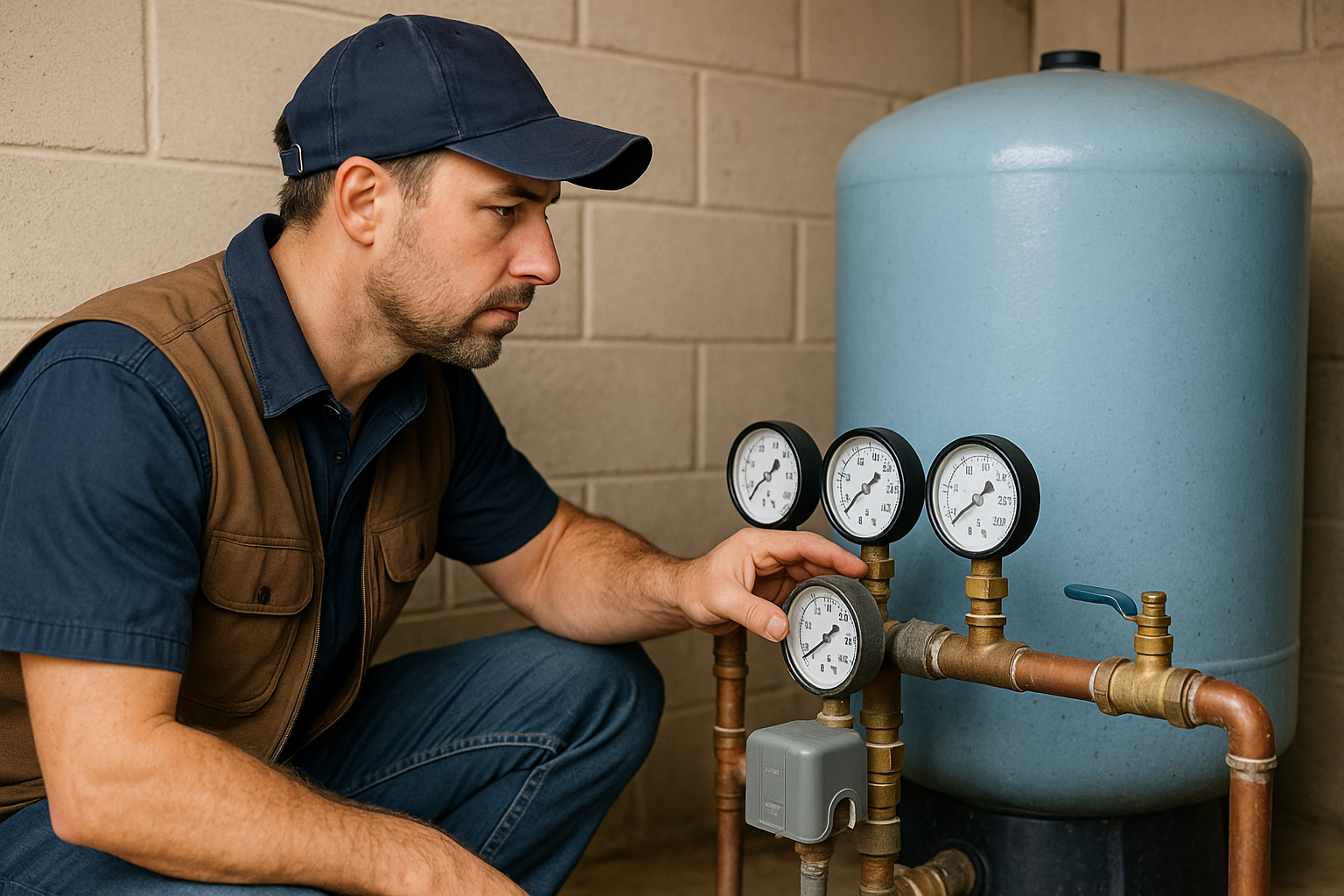
- Pressure gauges — Monitor filter condition
- Sample ports — For water testing
Maintenance Schedule
Monthly
- Check sediment filter (clear housing) or pressure drop
- Check softener salt level
- Visual inspection of all equipment
Quarterly
- Replace sediment filter if needed (or every 3-6 months)
- Clean brine tank if residue builds up
- Check UV indicator light
Annually
- Replace UV bulb
- Replace or regenerate carbon media
- Professional system check-up
- Water testing to verify treatment effectiveness
Every 2-3 Years
- Replace UV quartz sleeve
- Sanitize softener resin
- Check iron filter media condition
Cost Summary
| Component | Equipment | Installation | Annual Maintenance |
|---|---|---|---|
| Sediment filter | $50-$200 | $100-$200 | $50-$100 |
| Iron filter | $600-$1,800 | $200-$400 | $50-$100 |
| Water softener | $400-$2,000 | $200-$400 | $100-$200 (salt) |
| Carbon filter | $200-$1,000 | $100-$300 | $50-$150 |
| UV sterilizer | $300-$800 | $100-$300 | $75-$150 |
Frequently Asked Questions
How much does a whole house water filter cost for a well?
Basic sediment filtration costs $200-$500 installed. Multi-stage systems addressing sediment, iron, and hardness typically run $1,500-$4,000. Complete systems with UV disinfection and specialty filters can cost $3,000-$8,000 or more. Annual maintenance (replacement filters, salt for softeners) typically adds $150-$400/year. Actual costs depend on your specific water quality issues, home size, and chosen equipment quality.
What order should whole house filters be installed?
Proper filter sequence for wells: 1) Sediment pre-filter (removes particles that damage other equipment), 2) Iron/manganese filter (if needed—iron fouls softener resin), 3) Water softener (if hard water—protects carbon and UV), 4) Carbon filter (improves taste/odor), 5) UV sterilizer (kills bacteria—must be last because it needs clear water). Each stage protects the next—wrong order reduces effectiveness and increases maintenance costs.
Do I need a whole house filter if I have a water softener?
Yes—you should have at least a sediment filter BEFORE your water softener. Well water contains sand, silt, and particles that will clog and damage the softener resin bed, causing premature failure. Additionally, softeners only remove hardness minerals—they don't address bacteria, chemicals, iron (above small amounts), or taste/odor issues. A complete system typically includes at minimum a sediment filter + softener, with additional treatment stages based on your water test results.
How often do whole house filters need to be changed?
Sediment filters: every 1-6 months depending on water quality and usage. Carbon filters: every 6-12 months or per manufacturer specifications. UV bulbs: annually, even if still lighting (UV output degrades). Water softener resin: 10-15 years typically with proper maintenance. Iron filter media: 5-8 years depending on iron load. Actual intervals depend on your water quality—wells with high sediment need more frequent filter changes.
Our Whole House Filtration Services
Southern California Well Service designs and installs complete water treatment systems:
- Water testing — Identify exactly what treatment you need
- System design — Custom configuration for your water quality
- Professional installation — Proper sequencing and sizing
- Maintenance programs — Keep your system running efficiently
- Troubleshooting — When water quality changes or equipment fails
Design Your Whole House System
Start with a water test—we'll design the right system for your well.
Call (760) 440-8520Free water testing with system installation | San Diego County
Related: Water Testing | Sediment Filters | Water Softeners
Related Articles
Continue learning about well maintenance and troubleshooting