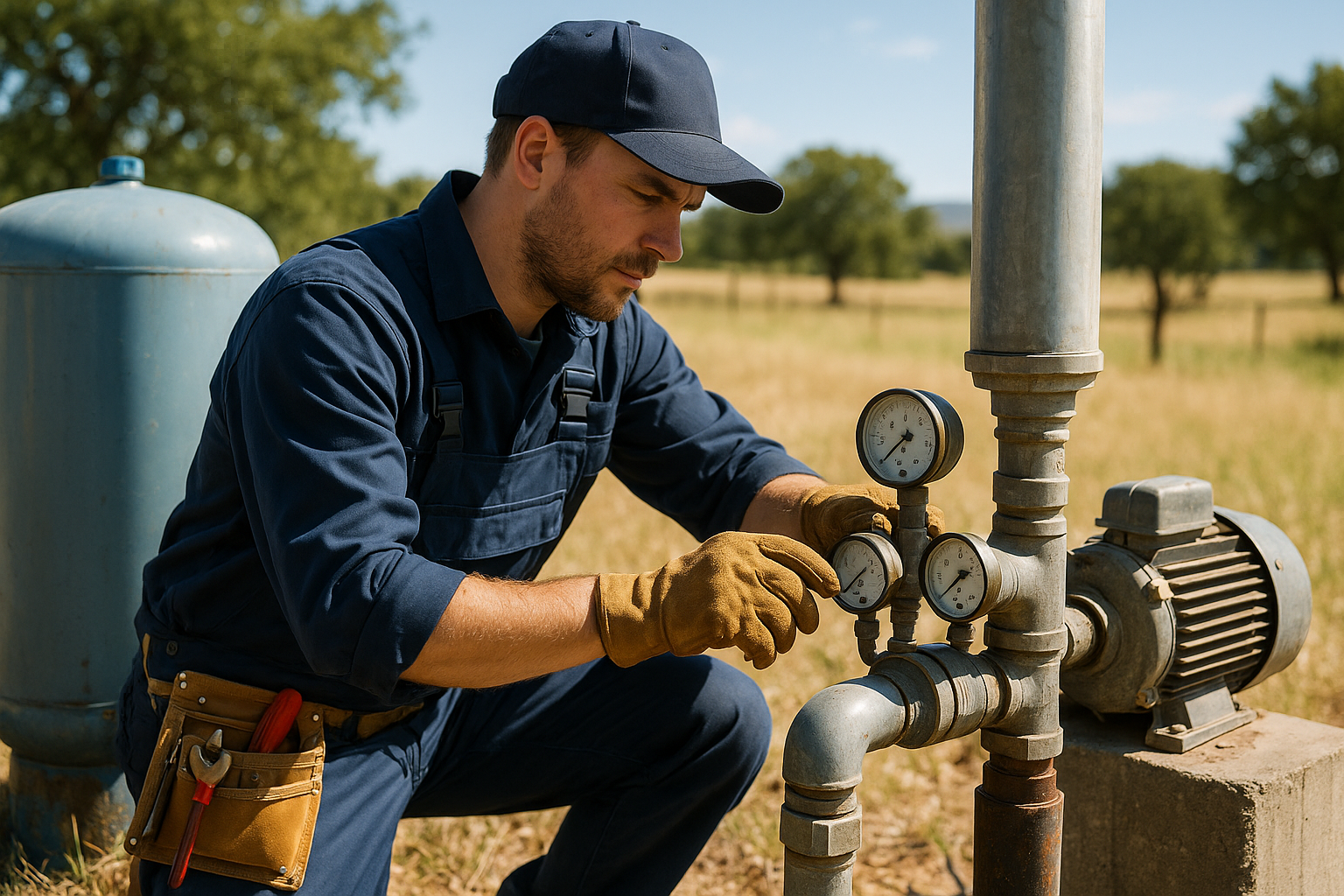
You're sitting in a quiet house when you hear the well pump kick on. A minute later, it shuts off. Then it starts again. And again. This "short cycling" is one of the most common well system problems—and one of the most damaging if left unfixed.
📋 In This Guide
- First: Is Water Running?
- Cause #1: Waterlogged Pressure Tank
- Cause #2: Leaks in the System
- Cause #3: Check Valve Failure
- Cause #4: Pressure Switch Issues
- Why Short Cycling Is Serious
- Quick Diagnostic Summary
- Pump Won't Stop Cycling?
- Frequently Asked Questions
- Related Articles
A pump that runs every few minutes is wearing itself out rapidly, driving up your electric bill, and telling you something is wrong. Here's how to diagnose the cause.
First: Is Water Running?
The first diagnostic question is simple but critical:
Cycling When Water IS Being Used
If the pump cycles rapidly while you're showering, running the dishwasher, or otherwise using water, the problem is almost certainly a waterlogged pressure tank (or undersized tank).
Cycling When NO Water Is Being Used
If the pump turns on by itself with all faucets off, you have either:
- A leak somewhere in the system
- A failing check valve letting water drain back to the well
- A leaking toilet flapper (very common)
- Pressure switch problems (less common)
The diagnosis is different for each scenario.
Cause #1: Waterlogged Pressure Tank
Most common cause when cycling during water use.
Bladder-style pressure tanks maintain an air cushion that provides drawdown—the usable water between pump cycles. When the bladder fails or loses its air charge, the tank fills completely with water. With no air cushion, there's no reserve—the pump must run constantly to maintain pressure.
How to Check
- Turn off power to the pump
- Open a faucet to relieve pressure
- Tap on the pressure tank from bottom to top
- Healthy tank: Hollow sound at top (air), solid at bottom (water)
- Waterlogged tank: Solid sound throughout
You can also check the air valve (Schrader valve) on top of the tank. With pressure relieved, a properly charged tank should have air pressure at 2 psi below cut-in setting (e.g., 38 psi for a 40/60 system). If water spurts out or pressure is very low, the tank is waterlogged.
The Fix
- If bladder intact: Recharge air pressure
- If bladder failed: Replace the pressure tank ($300-600 installed)
Need Professional Help?
Southern California Well Service provides expert pump diagnostics across San Diego, Riverside, and San Bernardino Counties. Licensed C-57 contractor (CSLB #1086994).
Cause #2: Leaks in the System
Most common cause when cycling with no water in use.
Any leak that lets water escape causes pressure to drop, triggering the pump. Common leak locations:
Above Ground Leaks
- Toilet flappers: The #1 hidden water waster. A slow leak constantly drains water
- Dripping faucets: Even a slow drip adds up
- Water heater relief valve: Sometimes drips into floor drain unnoticed
- Humidifiers/ice makers: May leak or run continuously
- Irrigation systems: Stuck valves or broken heads
Underground Leaks
- Cracked supply line from well
- Failed fittings at wellhead
- Irrigation mainline cracks
Leak Detection Steps
- Turn off ALL water-using appliances (ice maker, water softener, etc.)
- Check every toilet by putting food coloring in tank—if color appears in bowl within 30 minutes, flapper is leaking
- With everything off, watch the pressure gauge. If pressure slowly drops, water is escaping somewhere
- Listen at the well—if pump kicks on with nothing running, follow the sound of running water
Cause #3: Check Valve Failure
Check valves prevent water from draining back down the well when the pump stops. If the check valve fails:
- Water drains back after each pump cycle
- Pressure drops rapidly
- Pump must run again to restore pressure
- Cycle repeats indefinitely
Signs of Check Valve Failure
- Pressure drops steadily when pump is off (watch the gauge)
- You hear water running back into the well after pump stops
- Air spurts from faucets when pump starts (water fell, air entered lines)
- Takes longer for water to reach faucets after pump starts
The Fix
For submersible pumps, the check valve may be at the pump or at the wellhead. Wellhead check valves are accessible; pump-mounted check valves require pulling the pump.
Cost: $50-200 for wellhead check valve replacement; $500-1,500+ if pump must be pulled.
Cause #4: Pressure Switch Issues
Less common, but possible:
- Narrow pressure range: Settings like 40-50 psi instead of 40-60 cause more frequent cycling
- Debris in switch: Sediment can cause erratic operation
- Failing switch contacts: May turn pump on/off erratically
- Clogged sensing port: Switch doesn't read pressure accurately
How to Check
- Note the cut-in and cut-out pressures (watch gauge during cycle)
- Should be 20 psi apart (e.g., 40/60 or 30/50)
- If range is narrow or inconsistent, switch may need adjustment or replacement
Pressure switches are inexpensive ($20-50) and relatively easy to replace.
Why Short Cycling Is Serious
Pump Damage
Each pump startup:
- Draws 3-5x running amps (starting surge)
- Creates mechanical stress on motor and bearings
- Heats the motor windings
A pump rated for 300,000 cycles over 15+ years might only last 1-2 years with short cycling. Submersible pump replacement costs $1,500-4,000.
Energy Waste
Starting a pump uses more electricity than running it. Frequent cycling dramatically increases power consumption—sometimes 2-3x normal.
Water Hammer
Rapid cycling can cause water hammer—pressure spikes that stress pipes and fittings.
Quick Diagnostic Summary
| Symptom | Likely Cause | Solution |
|---|---|---|
| Cycles rapidly during water use | Waterlogged tank | Recharge or replace tank |
| Cycles with no water running | Leak or failing check valve | Find leak; replace check valve |
| Pressure drops when pump off | Leak or check valve | Check valve or find leak |
| Tank sounds solid throughout | Waterlogged tank | Replace tank |
| Narrow pressure range | Switch settings | Adjust or replace switch |
Pump Won't Stop Cycling?
Short cycling destroys pumps quickly. We can diagnose the cause and fix it before your pump fails.
Call SCWS at (760) 440-8520
Frequently Asked Questions
- Why does my well pump turn on and off by itself?
- If the pump cycles when no water is being used, you have a leak or failing check valve allowing water to drain back. If it cycles rapidly during use, the pressure tank is likely waterlogged. Both conditions cause short cycling that damages the pump over time.
- How often should a well pump turn on?
- With normal use, a well pump should turn on only when you're using water and cycle no more than once every few minutes at most. A pump cycling every minute or two—especially with no water in use—indicates a problem that needs attention.
- Will short cycling damage my well pump?
- Yes, short cycling is very hard on pumps. Each startup draws high amps and creates mechanical stress. A pump rated for 300,000 cycles might only last a year or two if it's cycling every few minutes. It also dramatically increases electricity usage.
- How do I stop my well pump from short cycling?
- First identify the cause: check if the pressure tank is waterlogged (tap test), look for leaks (toilet flappers are common), and verify the check valve is working (watch if pressure holds when pump stops). Fix the underlying cause—don't just ignore the cycling.
- Can a leaking toilet cause well pump short cycling?
- Yes! A leaking toilet flapper is one of the most common causes of "phantom" pump cycling. The slow leak continuously drains water, causing pressure to drop and triggering the pump. Put food coloring in the tank to test—if color appears in the bowl, the flapper needs replacement.
- How do I know if my pressure tank is waterlogged?
- Turn off the pump and relieve pressure, then tap on the tank from bottom to top. A healthy tank sounds hollow at the top (air cushion) and solid at the bottom (water). A waterlogged tank sounds solid throughout. You can also check the air valve—water spraying out indicates a failed bladder.
Related Articles
Continue learning about well maintenance and troubleshooting