Well Water Pump Repair: Complete Guide to Diagnosing and Fixing Pump Problems
Published February 2, 2025 | 14 min read
📋 In This Guide
- Understanding Your Well Water Pump
- Common Well Water Pump Problems
- Well Water Pump Repair Costs
- Repair vs. Replacement: Making the Right Decision
- Basic Troubleshooting You Can Do
- The Professional Repair Process
- Preventing Future Pump Problems
- Service Areas for Well Water Pump Repair
- Frequently Asked Questions
- Related Articles
When your well water pump fails, you need answers fast. Whether you're dealing with no water, low pressure, or a pump that won't stop running, understanding well water pump repair helps you make informed decisions. This comprehensive guide covers common pump problems, repair costs, troubleshooting tips, and how to know when repair makes sense versus replacement.
Need Well Pump Repair Now? Southern California Well Service provides expert pump repair throughout San Diego and Riverside Counties. Same-day emergency service available. Call (760) 440-8520 for immediate assistance.
Understanding Your Well Water Pump
Before diving into repairs, it helps to understand how your well pump system works. Most residential wells in San Diego and Riverside Counties use one of two pump types:
Submersible Pumps
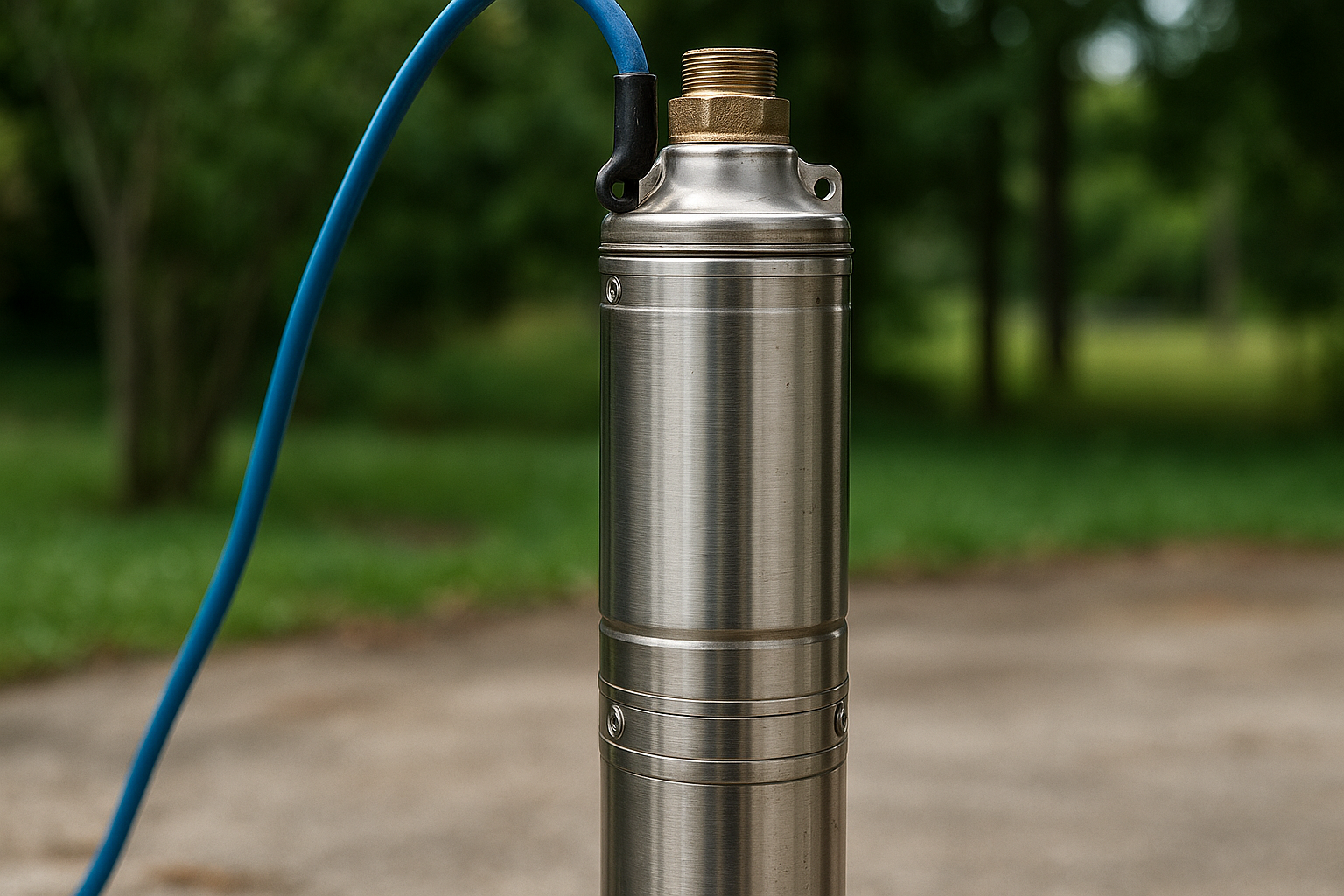
Submersible pumps are the most common type in our area. They're installed deep inside the well, typically 100-600 feet below ground. Key characteristics:
- Located underwater at the bottom of the well
- Push water up through the pipe to your pressure tank
- Very efficient for deep wells
- Typically last 10-15 years with proper maintenance
- Require specialized equipment to pull for repairs
Jet Pumps
Jet pumps are installed above ground and use suction to draw water up. They're suitable for shallow wells:
- Located in a pump house or basement
- Pull water up using a venturi mechanism
- Best for wells under 25 feet (shallow well jet) or 25-110 feet (deep well jet)
- Easier to access for repairs
- More prone to prime loss and less efficient for deep wells
Common Well Water Pump Problems
Understanding what can go wrong helps you communicate with your repair technician and evaluate their recommendations:
No Water At All
Complete loss of water is the most urgent problem. Possible causes:
- Power failure – Tripped breaker, blown fuse, or power outage
- Pressure switch failure – Not signaling the pump to turn on
- Control box failure – Relay, capacitor, or other component failed
- Burned out motor – Pump motor has failed completely
- Broken pipe or drop line – Water leaking back into the well
- Low water level – Drought or pump set too high
Low Water Pressure
Reduced pressure can indicate several issues:
- Worn pump impellers – Reduced pumping efficiency over time
- Waterlogged pressure tank – Failed bladder not maintaining pressure
- Clogged pipes or screens – Mineral buildup or sediment blockage
- Pressure switch maladjustment – Settings need calibration
- Partially closed valve – Check all valves in the system
- Declining well yield – The well itself is producing less water
Pump Running Constantly
A pump that won't shut off is working overtime and will fail prematurely:
- Water leak – Pipe break, running toilet, or dripping faucet
- Waterlogged tank – No air pressure to build up
- Stuck pressure switch – Contacts welded shut
- Check valve failure – Water flowing back down into well
- Pump can't keep up – Demand exceeds pump capacity or well yield
Pump Cycling On and Off Rapidly
Short cycling (also called short-cycling) causes excessive wear:
- Waterlogged pressure tank – Most common cause
- Pressure switch problems – Cut-in and cut-out too close together
- Small leak in system – Pressure drops just enough to trigger pump
- Undersized pressure tank – Not enough storage capacity
Air Sputtering from Faucets
Air in your water lines indicates:
- Low water level – Pump drawing air from above water level
- Suction leak – Air entering through pipe connections
- Failing pump – Worn seals or bearings
- Drop pipe leak – Crack allowing air entry
Sandy or Dirty Water
Sediment in your water suggests:
- Pump set too low – Drawing sand from well bottom
- Failed well screen – Allowing sediment entry
- Worn pump intake – Screen damaged or missing
- Well rehabilitation needed – Sediment accumulation in well
Well Water Pump Repair Costs
Repair costs vary significantly based on the problem and pump type. Here's what to expect in San Diego and Riverside Counties:
| Repair Type | Typical Cost | Time Required |
|---|---|---|
| Diagnostic Service Call | $150 - $250 | 1-2 hours |
| Pressure Switch Replacement | $150 - $350 | 1-2 hours |
| Capacitor Replacement | $150 - $300 | 1 hour |
| Control Box Repair/Replace | $200 - $500 | 1-2 hours |
| Pressure Tank Replacement | $400 - $1,200 | 2-4 hours |
| Check Valve Replacement | $200 - $400 | 1-2 hours |
| Pull & Inspect Submersible Pump | $500 - $1,000 | 4-6 hours |
| Submersible Pump Repair (pulled) | $800 - $1,500 | 4-8 hours |
| Jet Pump Repair/Rebuild | $300 - $800 | 2-4 hours |
| Complete Pump Replacement | $1,500 - $4,000 | 4-8 hours |
*Costs include parts and labor for typical installations. Deep wells (400+ feet) and difficult access may increase costs. Emergency/after-hours service typically adds 25-50%.
Repair vs. Replacement: Making the Right Decision
Not every pump problem requires full replacement. Here's how to evaluate your options:
When Repair Makes Sense
- ✓ Pump is less than 8-10 years old
- ✓ Problem is electrical (switch, capacitor, control box)
- ✓ First major repair for this pump
- ✓ Repair cost is less than 50% of replacement cost
- ✓ Pump motor tests good
- ✓ No history of repeated problems
When Replacement Is Better
- ⚠️ Pump is over 12-15 years old
- ⚠️ Motor has failed or is failing
- ⚠️ Multiple repairs in the past 2-3 years
- ⚠️ Repair cost exceeds 50-60% of replacement
- ⚠️ Pump is undersized for current needs
- ⚠️ Significant rust or corrosion
- ⚠️ Technology has significantly improved since installation
Basic Troubleshooting You Can Do
Before calling for service, there are safe checks you can perform:
Safe DIY Troubleshooting Steps
- Check the circuit breaker – Make sure the pump breaker hasn't tripped. If it has, reset it once. If it trips again immediately, don't reset—call a professional.
- Check for visible leaks – Look for water around the pressure tank, at pipe connections, and from faucets or toilets.
- Listen at the pressure tank – With water running, you should hear the pump kick on when pressure drops. No sound may indicate electrical issues.
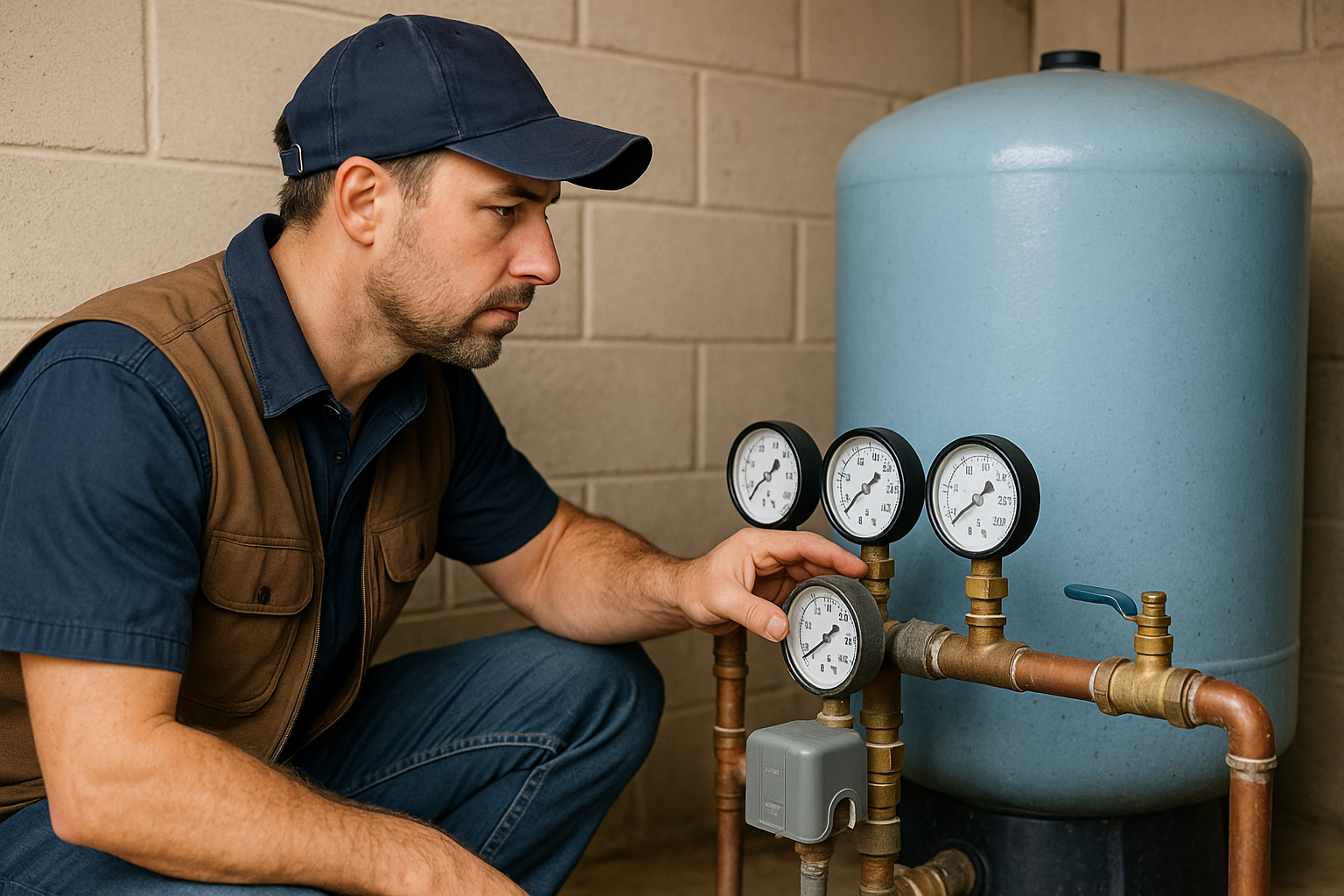
- Check the pressure gauge – Note the pressure reading. Normal is 40-60 PSI. Zero pressure when pump should be running indicates a problem.
- Check the pressure tank – Tap on it at different heights. A waterlogged tank sounds "thud" all the way up; a proper tank sounds hollow at the top.
⚠️ Do NOT Attempt These Repairs Yourself
- • Working inside the control box or with electrical wiring
- • Pulling a submersible pump from the well
- • Adjusting pressure switch settings without training
- • Working with 240V electrical systems
- • Sealing or welding any pressurized components
Improper repairs can cause electrocution, further damage, contamination, or void your warranty. Always call a licensed professional.
The Professional Repair Process
When you call for well water pump repair, here's what a professional service visit typically involves:
Step 1: Diagnostic Assessment
The technician will:
- Review the symptoms you've described
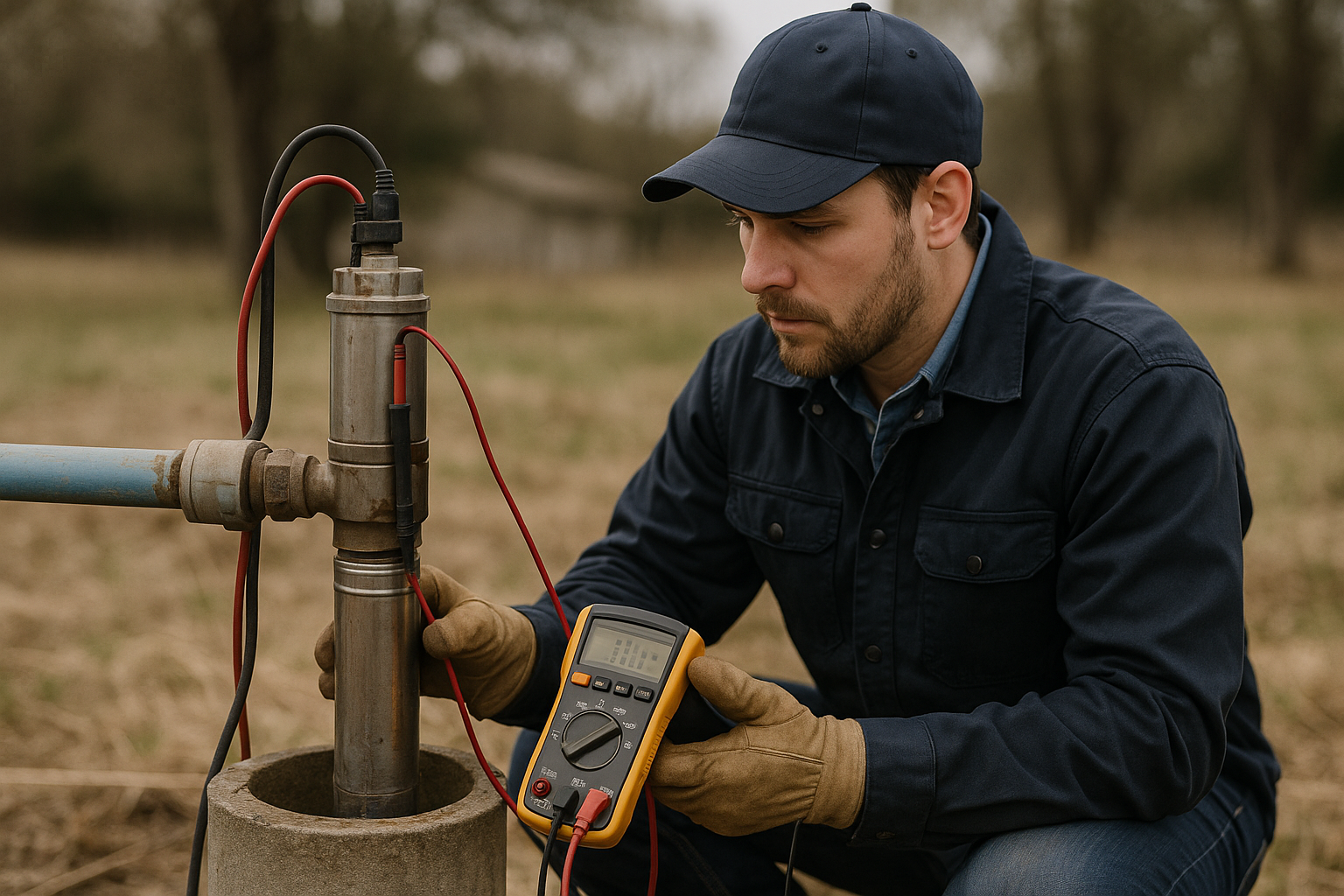
- Check electrical systems (voltage, amperage, continuity)
- Test pressure switch operation
- Check pressure tank condition
- Measure water pressure and flow
- Test the control box components
Step 2: Diagnosis & Estimate
After assessment, you'll receive:
- Clear explanation of the problem
- Recommended repair approach
- Written cost estimate before work begins
- Options if multiple solutions exist
Step 3: Repair Execution
With your approval:
- Parts are sourced (often same-day from stocked vehicles)
- Repairs are completed
- System is tested thoroughly
- Adjustments are made for optimal performance
Step 4: Testing & Handoff
Before leaving:
- Full system test under normal operating conditions
- Pressure settings verified
- Explanation of what was done
- Warranty information provided
- Recommendations for preventing future problems
Preventing Future Pump Problems
Regular maintenance extends pump life and prevents emergency repairs:
- Annual inspections – Professional check of all system components
- Pressure tank maintenance – Check air pressure annually
- Water quality testing – Corrosive or scaling water damages pumps faster
- Protect from power surges – Consider a pump protector device
- Monitor performance – Note changes in pressure or pump behavior
- Address small problems early – Don't wait for complete failure
Service Areas for Well Water Pump Repair
Southern California Well Service provides well water pump repair throughout:
Frequently Asked Questions
How much does well water pump repair cost?
Repair costs typically range from $300-$1,500. Minor electrical repairs cost $150-$400, while pulling and repairing a submersible pump costs $800-$1,500. Full replacement runs $1,500-$4,000.
What are signs my well pump needs repair?
Common signs include no water, low pressure, pump running constantly, rapid cycling, unusual noises, air sputtering from faucets, sandy water, and high electricity bills.
Can a well pump be repaired or does it need replacement?
Many problems can be repaired—faulty switches, capacitors, wiring, and control boxes. However, if the motor is burned out, impellers are damaged, or the pump is over 15 years old, replacement is usually more cost-effective.
How long does well pump repair take?
Simple repairs take 1-2 hours. Complex repairs requiring pulling a submersible pump take 4-8 hours. Same-day emergency service is available.
Should I attempt DIY well pump repair?
Basic checks like breakers and visible leaks are safe. However, electrical work, pulling pumps, and complex diagnostics should be left to licensed professionals for safety and to avoid further damage.
Need Well Water Pump Repair?
Don't let a failing pump leave you without water. Southern California Well Service provides expert pump repair and replacement throughout San Diego and Riverside Counties. Our experienced technicians diagnose problems accurately and fix them right the first time.